
Phu Tai Prison for Female Prisoners of War
Click to listen:
Phu Tai Prison for Female Prisoners of War
After the failure of the “Special War” strategy (1961–1965), in order to regain the initiative on the Southern battlefield, the U.S. and Saigon regime shifted to the “Local War” strategy, focusing on “search and destroy” and “pacification.” They launched continuous large-scale operations of raids, arrests, and massacres, while expanding their prison system to detain patriots.
In Binh Dinh Province, from 1967 to 1972, the U.S.–Saigon forces used part of the barracks of the 22nd Infantry Division in Phuoc Long Commune, Tuy Phuoc District (today in Quy Nhon Bac Ward) to build a political prison. Initially called “Quy Nhon Prison for Viet Cong Prisoners,” it was later renamed “Phu Tai Quy Nhon Prison for Vietnamese Communist Prisoners of War.” In its early days, the prison held both men and women, but later it became primarily for women. It was a large-scale facility built to detain and torture female communist fighters from all over South Vietnam, with thousands of women imprisoned there at certain times. Guarding was extremely strict, with multiple layers of barbed-wire fences and watchtowers surrounding the camp.
At first, the prison was divided into three sections: A, B, and C—men were kept in Section C, women in A and B. Later, it was reorganized into four camps:
-
Camp 1: For female “chieu hoi” prisoners (those who defected) and newly captured women, as well as those deemed “stubborn,” whom defectors were used to persuade or coerce.
-
Camp 2: For female political prisoners, essentially the former Sections A and B.
-
Camp 3: A temporary male detention area, with prisoners later transferred to Con Dao Prison when numbers were large.
-
Camp 4: The solitary confinement area, for those labeled “rule violators.”
To extract information from political prisoners, the enemy used every brutal method of torture imaginable: pouring chili water or soapy water into the nose and mouth while stomping on the stomach and chest until water and blood spurted out, causing unconsciousness; dunking heads into DDT pesticide solution, leaving many women with peeled skin, hair loss, blurred vision, and headaches; beating with iron chains and electric batons into faces and mouths, breaking teeth and disfiguring mouths; even driving nails into wooden clubs to strike heads and bodies, causing severe injury and infection. Prisoners were burned on hands, feet, and bodies; sand and dirt were forced into noses, mouths, and ears with sticks, leaving many deaf or epileptic. The most vile tortures involved electrocuting and inserting objects into women’s private parts, causing urinary bleeding, prolapsed uterus, and permanent trauma.
They also built rows of iron cages and “tiger cages” where prisoners labeled “rule violators” were crammed into tiny barbed-wire cells, left under the burning sun unable to sit upright or move.
Words cannot fully describe the atrocities inflicted on the female prisoners of Phu Tai Prison. Many comrades heroically sacrificed their lives; others endured lifelong illness and disability. Yet, despite this cruelty, the enemy could not break their indomitable spirit. Under the leadership of the Party, the women continued to resist fiercely inside prison walls, unbowed by brutality, willing to suffer hunger, pain, and sickness in order to keep fighting. They turned the prison into a school and a battlefield, shattering the enemy’s sinister schemes. Their resilience and courage remain a shining example for future generations.
For its profound historical significance, Phu Tai Prison for Female Prisoners was recognized as a provincial-level historical site in 2002.
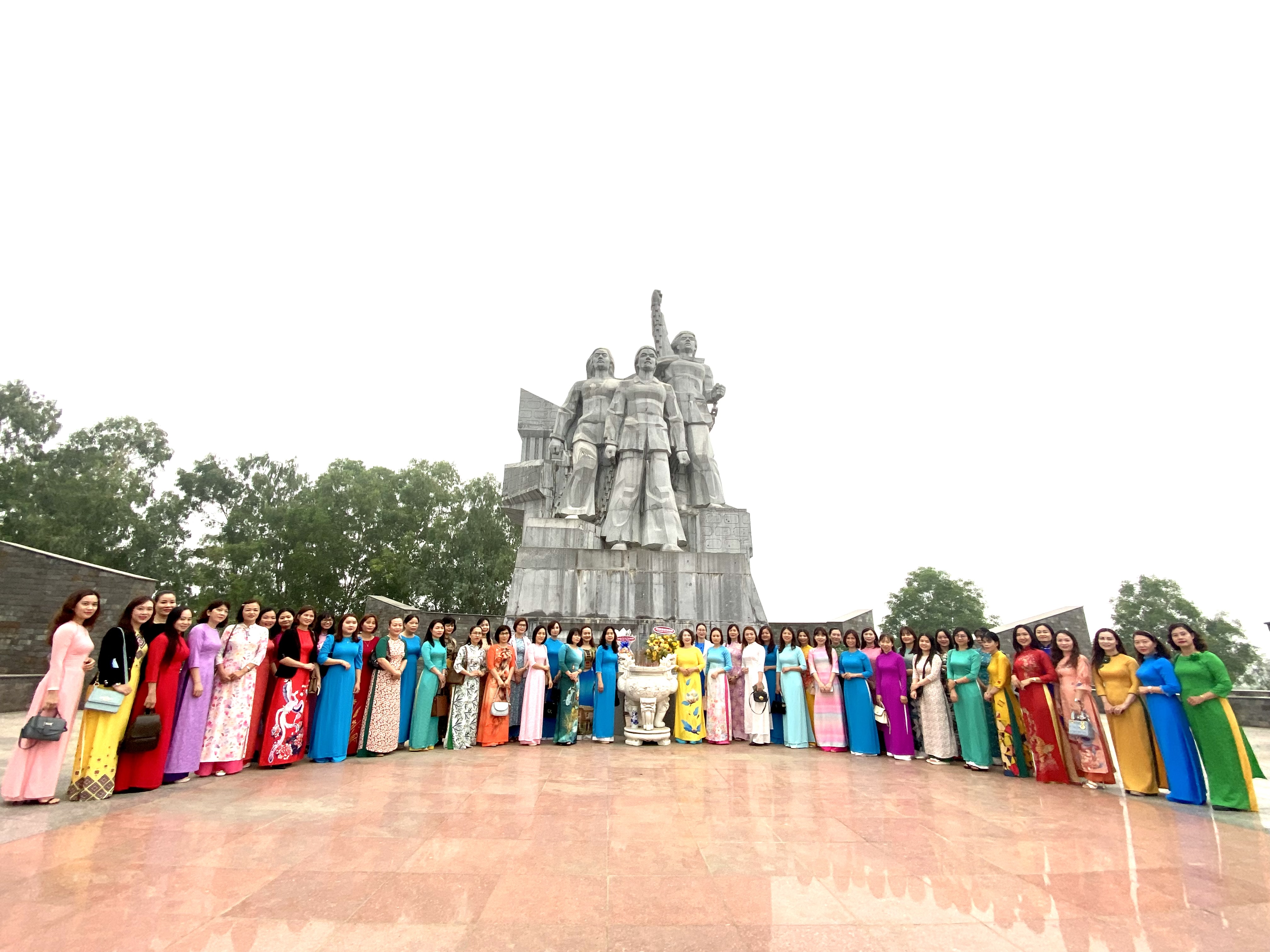
With the support of the Provincial Party Committee and People’s Committee, the site was restored and memorialized in 2017. Covering 6,268 m², the memorial includes roads, water and lighting systems, and green space. At the center stands a Thanh Hoa greenstone monument entitled “Praising the Heroism and Indomitable Spirit of Vietnamese Women in Prison.” The statue and pedestal together rise 11.66 meters, featuring three female figures representing the North, Central, and South regions. Though shackled, they stand tall with strong, defiant gestures, symbolizing their bravery and resistance against the enemy. Behind them, the pedestal depicts images of prison cells.
In May 2022, the collective of former female prisoners of Phu Tai Prison was awarded the title Hero of the People’s Armed Forces by the President of the Socialist Republic of Vietnam, in recognition of their extraordinary achievements during the resistance war against the United States
Ý kiến bạn đọc
- Đang truy cập7
- Hôm nay86
- Tháng hiện tại812
- Tổng lượt truy cập62,498