
Nguyen Trung Truc Temple
Click to listen:
Nguyen Trung Truc Temple
In the history of Vietnam’s struggle for national defense and independence, many heroes sacrificed themselves for the country and the people, leaving everlasting fame. In the Southern land in general and in Gia Lai Province in particular, there was a fisherman who became a legendary national hero: Nguyen Trung Truc.
His real name was Nguyen Van Lich, though within the insurgent army he was often called Quan Chon or Quan Lich. He was born in 1838 (Year of the Dog) in Binh Nhut Village, Cuu An District, Tan An Prefecture (today in Binh Duc Commune, Tay Ninh Province). His ancestral homeland, however, was Luoi Hamlet, Vinh Hoi Village, Trung An Commune, Phu Cat District, Binh Dinh Province (today Vinh Hoi Hamlet, Cat Tien Commune, Gia Lai Province). From a young age, he was known for his filial piety, patriotism, compassion for the people, and martial prowess. At 16 he began competing in public duels, and at 18 he successfully defended the arena for several days at a district market. His talent and reputation spread widely, earning the love and respect of the people.
In February 1859, when French forces invaded Gia Dinh to begin their conquest of Cochinchina, Nguyen Trung Truc rallied the Dan Dung militia, which quickly gained popular support.
In 1861, he joined Truong Dinh’s resistance army against the French, directly commanding many battles, including the famous victory of burning and sinking the French warship L’Espérance at Nhat Tao River on December 10, 1861.
In 1867, he was appointed Commander of Gia Dinh Province, then Military Governor of Ha Tien Province. However, before he could assume his post, Ha Tien fell to the French. Nguyen Trung Truc withdrew his forces to Hon Chong (now in Kien Giang Province). On the night of June 16, 1868, he and his insurgents launched a surprise attack, destroying and burning the French garrison at Kien Giang, holding control there for a week.
When the French recaptured the post, Nguyen Trung Truc’s forces retreated from Rach Gia to Hon Chong, then later to Phu Quoc Island. Determined to capture him at all costs, the French blockaded the island and cut off supplies. After a period of resistance, on September 19, 1868, Nguyen Trung Truc was captured. The French tried every means to persuade, bribe, and coerce him into surrender, but he steadfastly refused. Ultimately, they executed him by beheading at Rach Gia on October 27, 1868.
His unyielding spirit was immortalized in his famous last words:
“Only when the Westerners have uprooted every blade of grass in Vietnam will they be able to annihilate the Vietnamese who resist them.”
Poet Huynh Man Dat praised his victories with two immortal lines:
“The fire of Nhat Tao shook heaven and earth,
The sword of Kien Giang terrified even ghosts and gods.”
Legacy and Temple
National hero Nguyen Trung Truc sacrificed his life, leaving a shining example of patriotism for generations to follow. After his death, people across Southern provinces worshiped him as a deity, building temples in his honor. Tay Ninh and Kien Giang, in particular, have famous relics associated with his legendary victories. The annual Nguyen Trung Truc Festival remains a vibrant community event, attracting large numbers of participants.
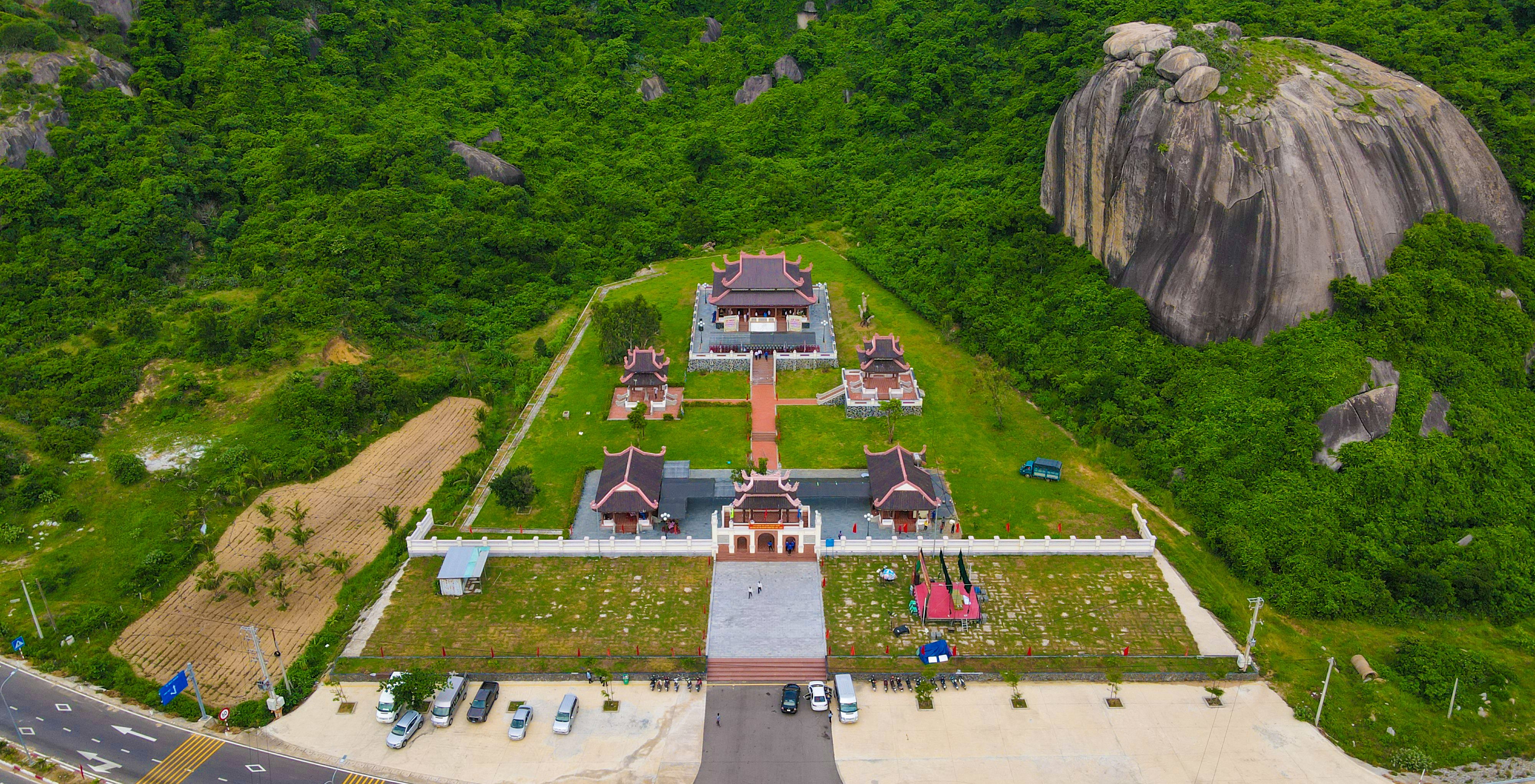
In his ancestral homeland of Gia Lai, to honor and commemorate his contributions, the Party, government, and people of Gia Lai built the Nguyen Trung Truc Temple in Vinh Hoi Hamlet, Cat Hai Commune (today Cat Tien Commune). Construction began on May 9, 2020, and the temple was inaugurated on October 11, 2020. Covering about 1.2 hectares, the complex includes a parking lot, boundary walls, a three-entrance gate, the main temple, and related structures.
The temple enjoys a favorable “mountain-back, sea-front” position: behind and alongside it lies the majestic Ba Mountain range with massive rock formations, while in front stretches the tranquil blue sea of Vinh Hoi.
This temple is not only a sacred place to honor and pay tribute to Nguyen Trung Truc but also a meaningful cultural and tourist site, serving as a “red address” for educating younger generations in the tradition of patriotism.
Ý kiến bạn đọc
- Đang truy cập11
- Hôm nay90
- Tháng hiện tại816
- Tổng lượt truy cập62,502